

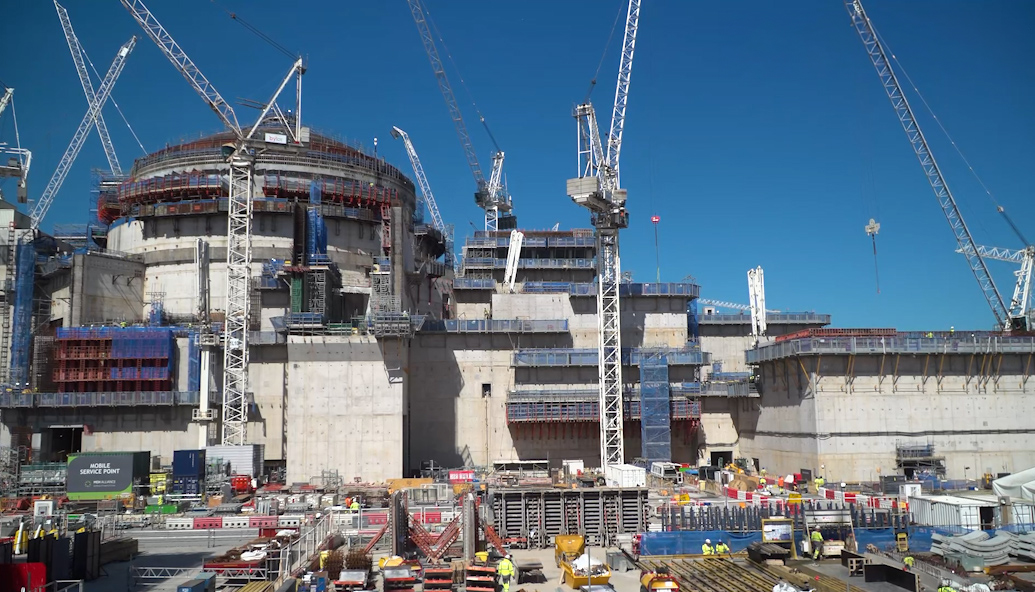
The UK civil nuclear workforce has passed 100,000 for the first time, driven by major investment in Hinkley Point C, Sizewell C, small modular reactors and fusion.
New figures from the Nuclear Industry Associationshow employment reached a record 102,606 in 2026, up from 61,371 in 2021.
That represents growth of 67% in five years, with 4,433 jobs added in the past year alone.
The jobs are also heavily concentrated outside London and the South East, with 86% based elsewhere in the country.
The NIA says the increase has been driven by construction at Hinkley Point C and government-backed investment in Sizewell C and Project Gwyndod, the planned small modular reactor programme at Wylfa in North Wales.
Sizewell C employment has risen 62.6% over the past year as the project moves into construction.
The Suffolk scheme is expected to create around 17,000 jobs at peak construction and 1,500 apprenticeships, while around 70% of project spending is expected to flow to UK companies.
In North Wales, Great British Energy – Nuclear is progressing plans for three Rolls-Royce SMRs at Wylfa, delivering at least 1.4GW.
The programme is expected to support around 8,000 jobs across the UK, including 3,000 locally.
Since 2023, GBE-N has awarded nearly £900 million of contracts, with more than 70% going to UK-registered companies, underlining the scale of supply-chain work now being created around new nuclear.
Fusion is adding another strand to the expansion.
Nearly 3,000 people are employed by the UK Atomic Energy Authority in Oxfordshire and the Government has committed more than £2.5 billion over five years to fusion.
That includes £1.3 billion for the STEP programme at West Burton in Nottinghamshire, which aims to deliver a prototype fusion power plant by 2040, as well as hundreds of millions for research, fuel technology, AI, supercomputing, skills and commercialisation.
The Government says much of that investment will flow into private engineering, construction and technology companies.
The existing nuclear fleet continues to support around 5,000 jobs, while decommissioning and the nuclear fuel sector employ thousands more.
Tom Greatrex, Chief Executive of the Nuclear Industry Association, said: “The nuclear sector continues to be a critical engine of growth and investment outside of London and the South East.”
He added: “It is now critical that the UK Government implements reforms of nuclear regulation in full to unlock further growth and job creation while cutting the cost and schedule of new nuclear projects.”
The latest figures suggest Britain’s nuclear expansion is increasingly becoming an industrial and regional employment programme as much as an energy policy.
Copyright © 2026 Energy Live News LtdELN